

The Posture Reset: Five Desk Habits Worth Breaking
Nobody sets out to sit badly. It creeps in. The laptop that was temporary, the chair that was fine, the phone call that turned into forty minutes with the handset wedged against your ear. Most desk posture tips assume you will remember to sit up straight, and you will, for about four minutes. The better plan is to change the furniture so the bad habit has nowhere to go.
Here are the five habits we see most often, what each one does to you by Friday, and the one change that removes it.
Five desk posture tips, one habit at a time
1. Perching on the front edge
You sit forward to reach the keyboard, the backrest is behind you doing nothing, and your lower back holds you up all day. Usually the seat is too deep or the desk is too far away. A chair with a seat slide fixes the depth: the Ergo Click Plus posture chair slides between 44 and 47cm, so your back can reach the backrest with a couple of fingers' gap behind the knee. Then pull the chair in. A backrest cannot help you from six inches away.
2. Craning at the screen
Laptop flat on the desk, head tipped down, neck doing the work of a hinge. The top of the screen wants to sit at about eye level. A monitor arm is the cheapest fix and the one people put off longest. The quick release gas spring monitor arm moves from 16 to 40cm high, holds wherever you leave it, and comes as a single or a dual for two screens. If the laptop is the screen, raise it on the arm and add a separate keyboard. Your neck will not thank you out loud, but it will stop complaining.
3. Hunching over the keyboard
Shoulders up around the ears, elbows out. Nine times out of ten the chair arms are the wrong height or missing, so your shoulders carry your arms all day instead. Arms set level with the desk let the shoulders drop. Every chair page lists whether the arms adjust and by how much, and office chairs with adjustable arms gathers the ones that do. If arms stop the chair going under the desk, look for folding or removable ones rather than doing without.
4. Dangling feet
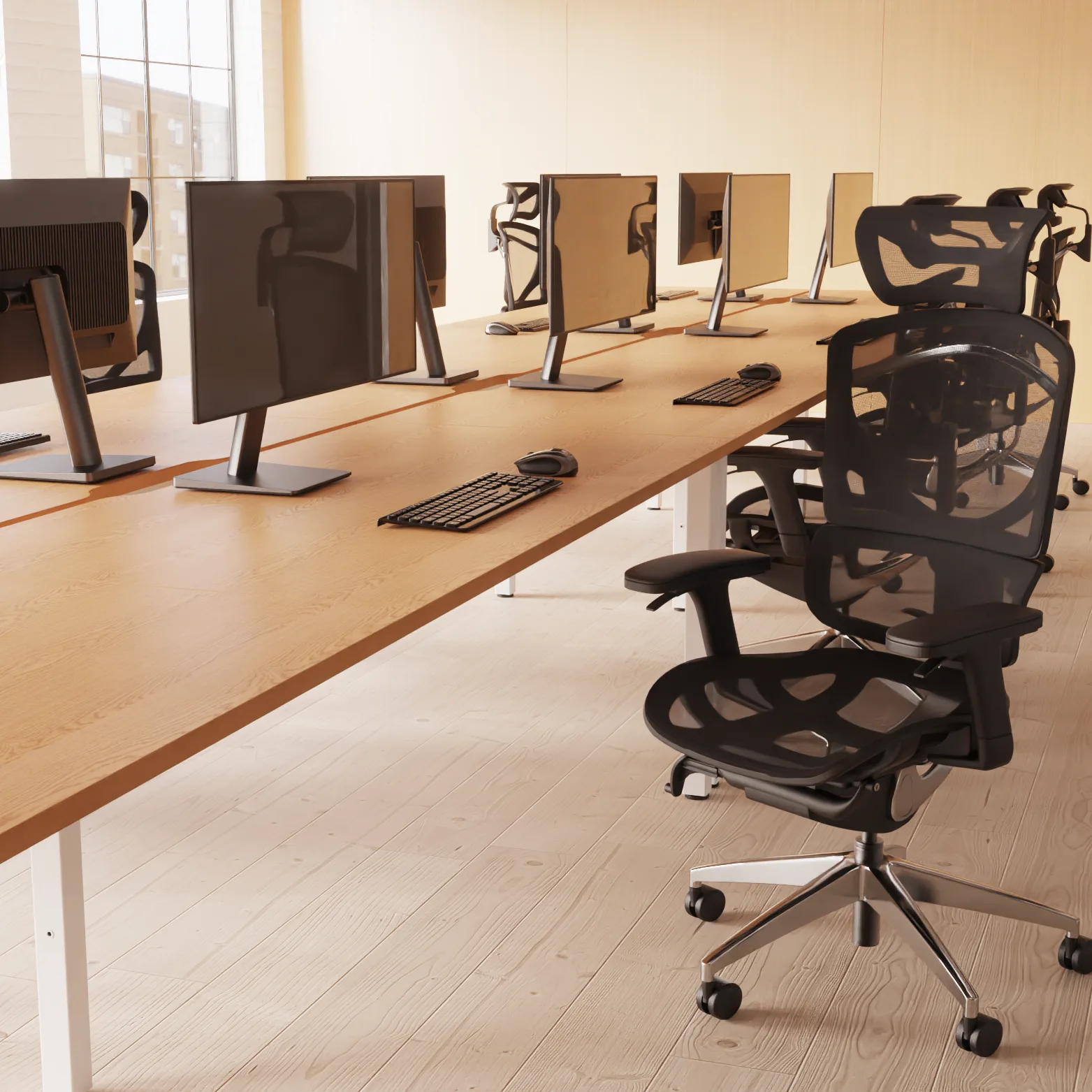
The chair goes up to meet the desk and the feet swing. Pressure builds behind the thighs, the lower back takes the strain, and by three o'clock you are perched on one foot. Feet flat, thighs level, is the rule. The seat height range on the product page tells you whether a chair can do that for you: the Ergo Click Plus runs from 45.5 to 55cm. At a standing desk or a counter, a tall chair with feet on the base ring is the same problem in disguise. The Sitall self-balancing posture stool lifts from 61 to 86cm and is built to be perched on, which is the point.
5. The phone-shoulder pinch
Handset clamped between ear and shoulder, one side of the neck shortened for the length of the call. A headset removes it entirely and costs less than the physio. For the long calls where you lean back and listen, a headrest does the rest of the work; office chairs with a headrest is the shortcut to the ones that have one.
Sitting up straight lasts four minutes. A chair that fits lasts the day.
The plan
One change a week, not five on a Monday. Week one, the screen height. Week two, the chair arms and the seat depth. Week three, the phone. You will not notice the difference on a Tuesday. You notice it when you stop noticing your back.
The chairs built around this are in ergonomic office chairs, and the arms, stands and cradles in monitor arms and stands. Every listing shows the seat height range, the arm adjustment and the recommended daily use, so the fit can be checked before the chair arrives rather than after. If you are not sure which one suits the person, tell us their height and their desk and we will say. That is the whole job.
Contents

Customer Experience Manager
Makes sure every order feels handled by a person, not a portal.