

High Back vs Mid Back Chairs: What the Difference Does
People ask me whether to buy a high back office chair or a mid back one as though one of them is the upgrade. Neither is. They do different jobs, and the right one depends on how you spend your day, not on how important the chair looks.
Here is the difference in centimetres, and what it does for you.
What high back actually means
It is the height of the backrest above the seat. A mid back, which we list as medium back, usually stops around the shoulder blades. A high back carries on up to the shoulders and often has a headrest on top.
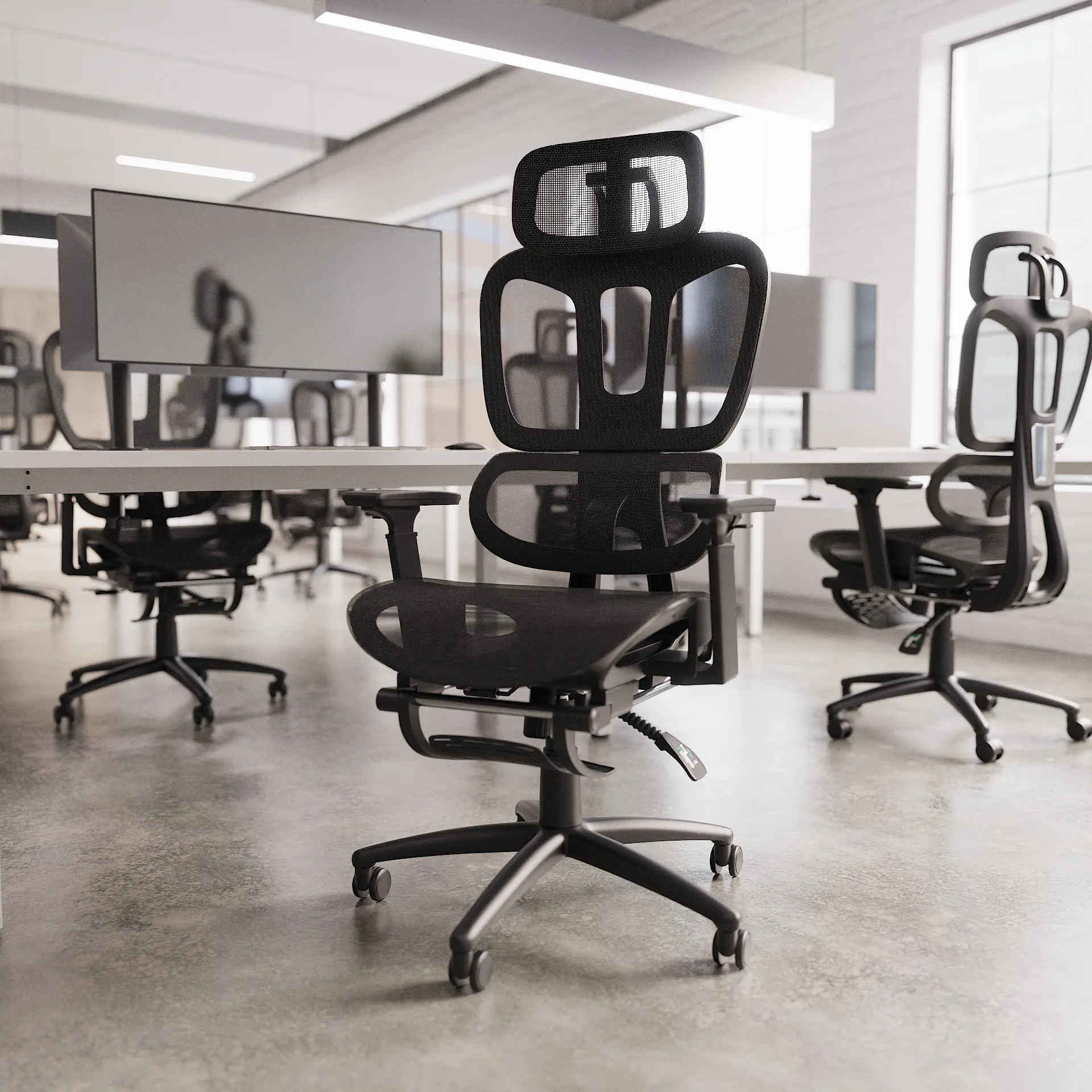
Two chairs from our own range show the gap. The Ezra medium back leather executive chair has a 53cm back and stands 98cm tall. The Horizon high back mesh executive chair has a back that adjusts from 70cm to 81cm, a headrest that adjusts for height and pivots, and stands 115cm to 134cm tall. That makes it between 17cm and 36cm taller, depending on how it is set.
Both are rated for eight hours a day. So this is a question of fit, not of which one lasts longer.
Who a high back office chair suits
Anyone who leans back. That sounds flippant, but it is most of the answer. A tall backrest holds your upper back and shoulders when you recline, and reclining is when the extra height earns its place.
That covers people who read long documents, people who take a lot of calls and sit back to do it, and people who think best with their hands behind their head. It also covers taller people, for whom a mid back can stop below the shoulder blades and support very little.
The headrest is a narrower case. It is for reclining, not for typing. If you sit upright at a keyboard all day your head will never touch it, and you will forget it is there. If you lean back for a call or a think several times an hour, a headrest that adjusts for height and angle, like the Horizon's, is worth having. A fixed one at the wrong height is worse than none, because it nudges your head forward.
Our high back office chairs page gathers the tall ones from across the range.
Who never needs one
People who sit forward and work. If your day is typing, drawing or leaning in to a screen, your back rarely meets the top half of the chair. What matters to you is the lower back: a seat depth that suits your legs, lumbar support you can place, and a tilt you can set to your weight. You can get all of that without the extra height.
A mid back also leaves your shoulders and elbows more room. A tall backrest can get in the way if you turn a lot, reach across the desk or swing round to talk to somebody behind you.
If that sounds like you, start with our medium back office chairs page.
How the chair fills a room
This is the part people forget. A chair is furniture before it is ergonomics.
A row of high backs round a table reads as a boardroom. It looks formal, and it blocks the view across the room. In an open-plan office a sea of tall backrests makes the space feel smaller and hides people from each other. Mid backs keep sightlines open and make a room look lighter, which is why so many meeting rooms use them. I would put high backs where somebody sits alone for long stretches, and mid backs almost everywhere else.
Choose by the working day
Three questions will get most people to the right chair:
Does the person sit back, or sit forward? Back points to a high back. Forward means a mid back is fine, and probably better.
How tall are they? If the top of a mid back lands below their shoulder blades, go taller.
Will they use a headrest? Only if they recline. If they do, make sure it adjusts.
Whichever you pick, look at the adjustments before the back height. Lumbar, seat depth and arm height do more for a back than an extra 20cm of chair. Back height, seat height and every adjustment are in the spec table on each chair across our computer and task chairs range, so you can compare them before anyone has to sit in anything.
Contents

Product Manager
Picks the ranges and knows which chair suits which back.