

Meeting Tables: Sizes, Shapes, and Seating Maths
A decent share of the calls we get about meeting tables come after the table has arrived, not before. It looks handsome, it matches the storage, and eight people cannot sit round it without a quiet elbow war breaking out. Meeting room table sizes are the one thing everyone reckons they can judge by eye, and almost nobody can, so here are the sums we run before we recommend anything.
The arithmetic is short. You need two numbers: how much table edge each person gets, and how much clear floor the table leaves around it. Get those right and the shape question mostly answers itself.
Meeting room table sizes: the elbow maths
The rule of thumb we work to is 60cm of table edge per person as the bare minimum - enough to take notes with your elbows tucked in. At 75 to 80cm each there is room for a laptop and a bit of personal dignity. Plan on the generous figure for any meeting longer than half an hour; the cheap seats get expensive quickly.
Run against tables we actually sell, the numbers come out like this:
A 120cm round seats four in comfort, five among friends. Six is possible, but only for meetings short enough to hold standing up anyway.
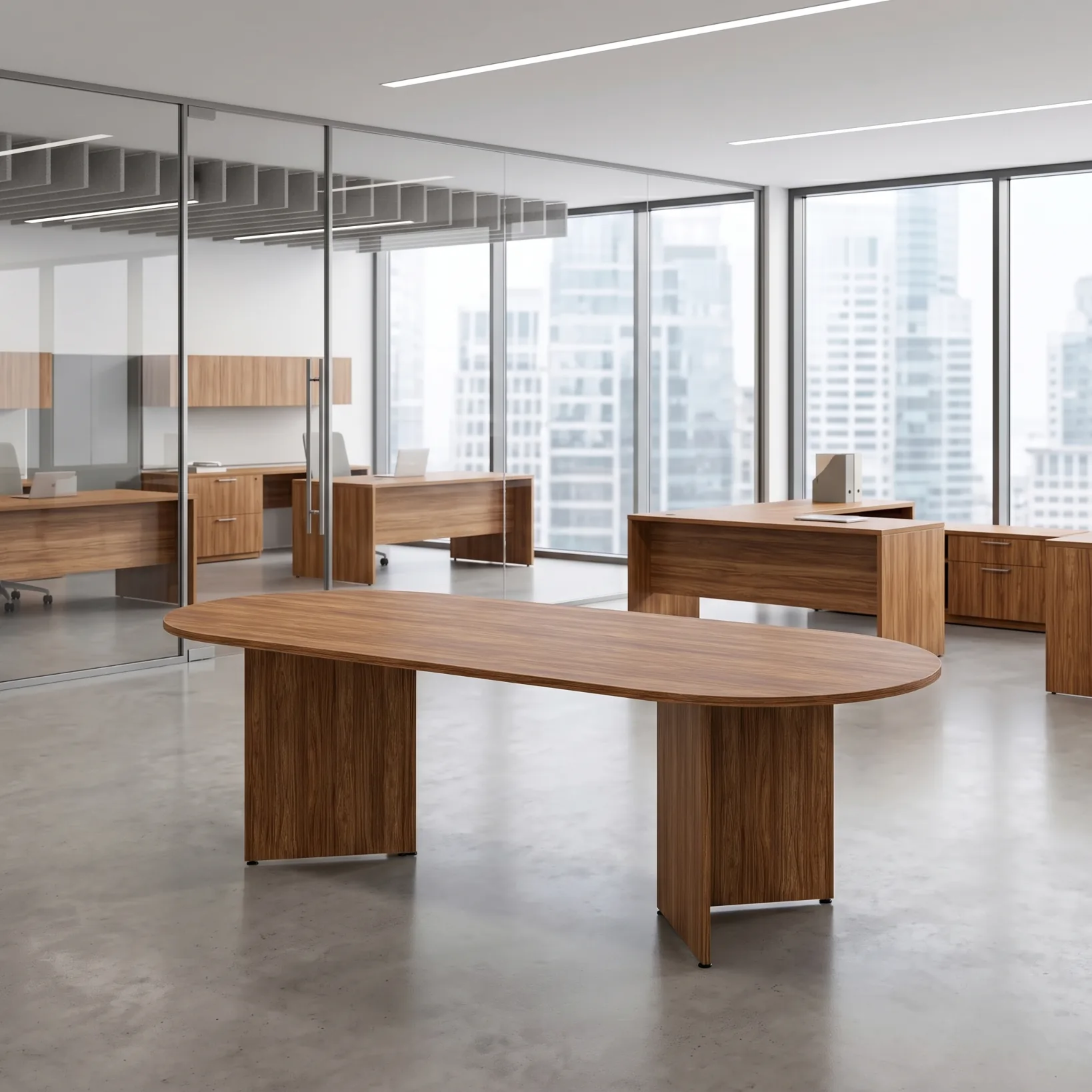
The Impulse arrowhead leg boardroom table runs from 180 to 240cm long and 100cm deep. At the full 240cm that is three a side in comfort plus one at each end - eight people, or ten if everyone breathes in.
A 1600mm square seats two a side, eight in all, with everyone facing someone. Useful for workshops, where a long thin table tends to split the room into two separate conversations.
The Oslo large rectangular boardroom table runs from 320 to 480cm long and 160cm deep. At the top end that is fourteen people in genuine comfort, without anyone sharing an armrest.
Shapes, and what they do to a meeting
Rectangles
The default, and for good reason: they fit the most rooms, and a screen at one end works without anyone craning. The one thing to know is that a rectangle has a head, and somebody will sit at it whether you have a hierarchy or not. Our rectangular meeting tables run from modest four-seaters to the full boardroom spread.
D-ends
A rectangle with its corners traded for curves. Same footprint, same seat count, but the people at the ends sit along a gentle arc instead of being boxed in, and there is no corner to catch a hip on the way past. If the room forces people to squeeze behind the end seats, you will be glad of the curve within a week.
Squares
Everyone sits the same distance apart and nobody gets the head. The 1600mm square is the sweet spot: two a side, eight in all, well suited to a team that is actually working on the same thing rather than reporting to it. Much bigger than that and the middle of a square becomes a no-man's-land for biscuits.
Rounds
No head of the table at all, which changes the tone of a meeting more than you would expect. A round table says conversation the way a long rectangle says agenda. Past 120cm or so a round stops being sociable and starts being a banqueting table, which is why ours sit at the small, friendly end. For catch-ups, interviews and one-to-ones, round meeting tables are the ones we point people at.
Power, the room, and the tape measure trick
Count the laptops before you choose the table. A meeting room without power at the table means an extension lead crossing the floor like a tripwire, and it will still be there in three years. Several of our boardroom tables can be had with a pop-up power module set into the top - the Impulse arrowhead among them - which keeps the sockets where the laptops actually are.
Then measure the room as well as the table. Chairs need about a metre behind the table edge to pull out and be walked past, so add two metres to the table's length and its width and see whether the room still swallows it. A 240 by 100cm boardroom table is happiest in a room around 4.4 by 3 metres; if that sounds bigger than the room you have, buy the smaller table. No meeting has ever been improved by the chairs touching the wall.
If you are torn between two sizes, masking tape on the carpet settles it in five minutes: mark out the tabletop, add the metre all round, and walk the route your colleagues will. Or send us the room measurements and we will do the sums with you - it is quicker than carrying a boardroom table back out again. The full range of meeting room and boardroom tables is on the site, specs and all.
Contents

Product Manager
Picks the ranges and knows which chair suits which back.