

Key Cabinets and Cash Boxes: Small Security, Big Peace of Mind
Every office has a drawer where the keys live. The pool car. The server room. The stationery cupboard nobody can open on a Friday. Key cabinets exist so that drawer stops being a drawer. Cash boxes do the same for the petty cash, which is usually in a biscuit tin. Both cost less than a chair. Both save an afternoon the first time something goes missing.
Here is how to size one, and how to pick the lock.
Sizing key cabinets by hook count
1. Count the keys, then add a third
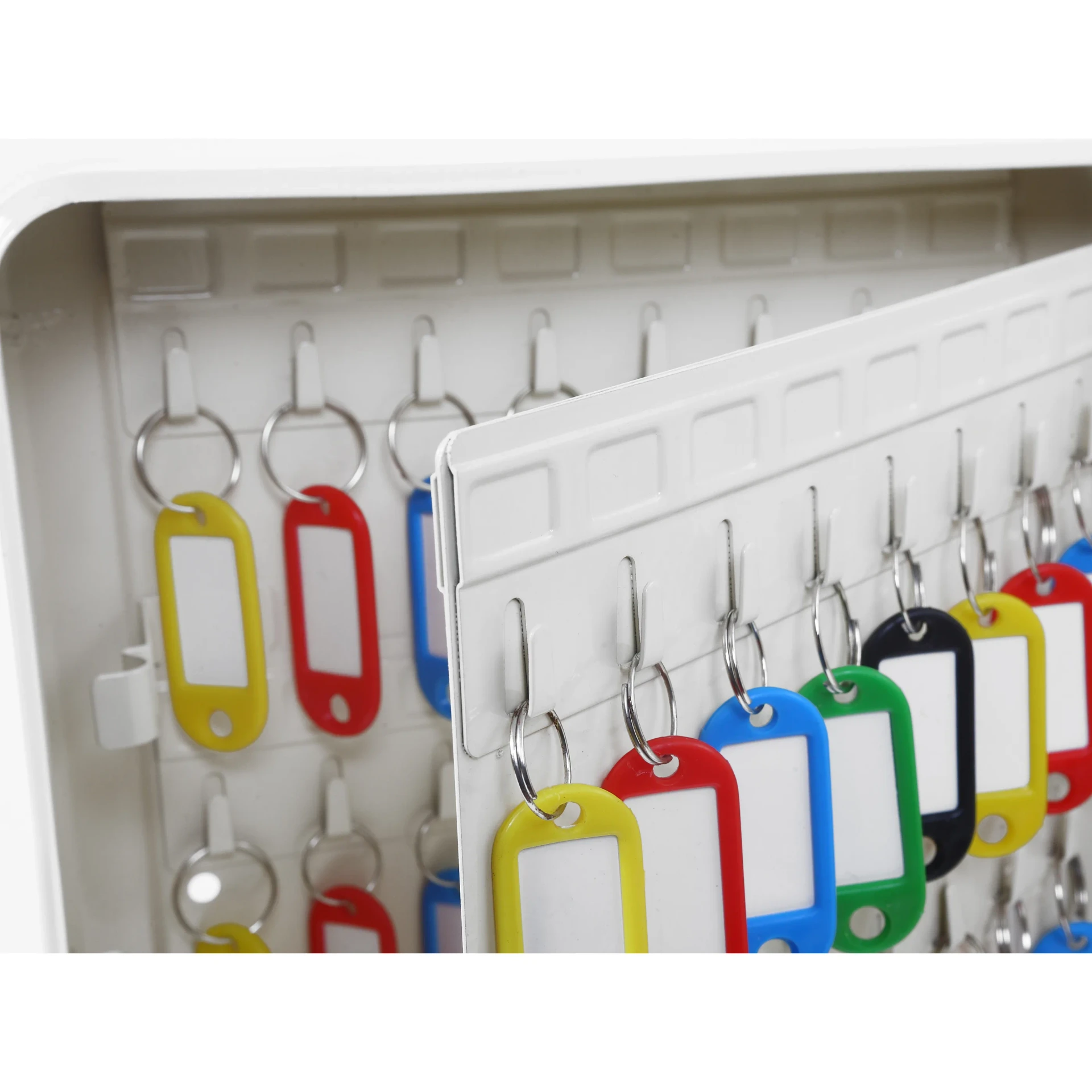
Count every set. Include the ones on lanyards, the spares in envelopes, the padlock for the bike shed. Then add a third. Cabinets fill up. A 42 hook cabinet with 42 keys in it is full the day it goes on the wall. The Phoenix Commercial key cabinet comes in seven sizes from 42 hooks to 600, so there is no reason to buy the one you will outgrow by Christmas. The hook bars adjust and the number labels come in the box. Use them. A missing set shows itself the moment the door opens.
2. Look at the keys as well as the count
A hook holds one flat key nicely. It does not hold a car key with a fob, a bunch of six and a padlock. Those need space between the hooks and depth behind the door. The Phoenix Deep Plus and Padlock cabinet is 14cm deep with the hooks spaced further apart, made for garages and dealerships. Fewer hooks per cabinet: 24, 50 or 100. That is the point. Everything clears the door when it closes.
3. Decide who returns keys, and when
If keys come back after hours, you want a deposit slot. The Phoenix Cygnus key deposit safe has a slot in the door, 55mm by 35mm. Keys go in without the door opening. Contractors and pool car drivers never see the other keys and never need the code. Sizes run from 30 hooks to 700.
Choosing the lock by how often it opens
Key lock. Two keys supplied. The cheapest option. Fine for a cabinet one person owns and opens twice a day. The weakness is the key to the key cabinet, which is a sentence that explains itself.
Electronic code lock. A four digit code you set yourself. Change it when someone leaves. Best for a cabinet several people use. On the Commercial cabinet it adds £57 to the 42 hook size.
Mechanical combination. Push buttons, no battery, over 8,000 combinations, and a push-shut latch so the door locks itself as it closes. Good for a workshop wall where nobody remembers to lock anything.
NetCode. Time-limited codes sent by email or text from a web portal. For a cabinet on a site you are not at. The Commercial cabinet offers it in every size.
The weakness of a key lock is the key to the key cabinet.
The small ones
Not everything needs a cabinet. The Phoenix Key Store combination key safe is 10cm by 6.5cm, about the size of a light switch. Four digit dial, magnetic hook inside so the key does not drop when the door opens, lifetime guarantee, £36. For the cleaner's key or the meter cupboard. The Phoenix lockable key box holds 20, 48 or 93 keys behind a key lock, from £29, and is only 8cm deep. That is the small office answer. Both come with the wall fixings.
Cash boxes
A cash box needs three things. A lock with two keys. A tray that splits coins from notes, so counting up is a count and not a rummage. A handle, so it goes to the bank in one hand. The Phoenix metal cash box has all three, in 20, 25 or 30cm widths, £29 to £33. It is red, so it is easy to find in a drawer. Keep it in a safe overnight. A cash box is for organising money, not defending it.
Where they are
Everything here is in key cabinets and cash boxes. Most of it, the key boxes, the cash boxes, the Key Store and the smaller Commercial cabinets, sits inside office storage under £100. If the code lock is the part that matters, electronic lock safes narrows the storage range to the ones with a keypad. All prices are ex VAT, as everywhere on the site. And every cabinet arrives pre-drilled with the bolts in the box, so the only thing left to find is a wall.
Contents

Marketing Manager
Gets Deskwell in front of people, then makes the words sound like us.