

Whiteboards and Noticeboards: Thinking Out Loud, on the Wall
Every office has one wall that does the thinking. The plan for the week goes on it. So does the rota, the phone list and the note about the fridge. Office whiteboards and noticeboards are cheap next to a desk, and they get used more. Choosing one is mostly about the surface and the size. Here is how I sort it.
Three whiteboard surfaces
1. Melamine
The budget surface. The Franken ValueLine melamine board is 150 by 100cm and costs £90. It is fine for a board that gets wiped once a week. Written on daily, melamine ghosts. Old marker stays in the surface and the board goes grey. It is not magnetic, and Franken themselves recommend it for light use. Good for a spare room, not the main wall.
2. Lacquered steel
The sensible middle. Steel takes magnets, wipes clean for years and does not cost much more. The X-Tra!Line dry wipe whiteboard comes in sizes from 45 by 60cm up to 240 by 120cm, with an aluminium frame and a marker tray. There is a cheaper coated version of the same board that is not magnetic, if a plain writing surface is all the room needs. Prices run from £31 to £144, and it carries a two year guarantee. This is the one I would put in most offices.
3. Glass
Glass does not ghost. Ever. The Franken magnetic glass whiteboard is 180 by 120cm in optical white, takes magnets and carries a 25 year guarantee on the surface. It costs £358 and weighs just under 30kg. That weight matters. Fix it to a solid wall with two people on the job, not to plasterboard with one. It looks better than anything else on this page. It should, at the price.
Noticeboards: felt or cork
Cork is the classic. Natural finish, aluminium frame, sizes from 60 by 45cm to 180 by 120cm, priced £36 to £95. Pins go in easily and it looks tidy for a year or two before the holes start to show. The X-Tra!Line felt noticeboard is the same sizes and near enough the same price, £37 to £92, in grey, blue, red or green. Felt hides pin holes better. It also lets you colour code. Red for safety notices, blue for the social stuff. People find things faster.
Sizes that get used
Bigger is not better. A board that is too large for the wall gets a corner used and the rest becomes storage for old marker. These are the sizes that earn their place.
90 by 60cm. One desk, or a small office of two or three. Big enough for a week's plan, small enough to wipe in one go.
120 by 90cm. A meeting room. Everyone at the table can read it, and one person can reach the top.
180 by 120cm. A team wall or a project room. This is the size you plan a month on, or run a whole job from.
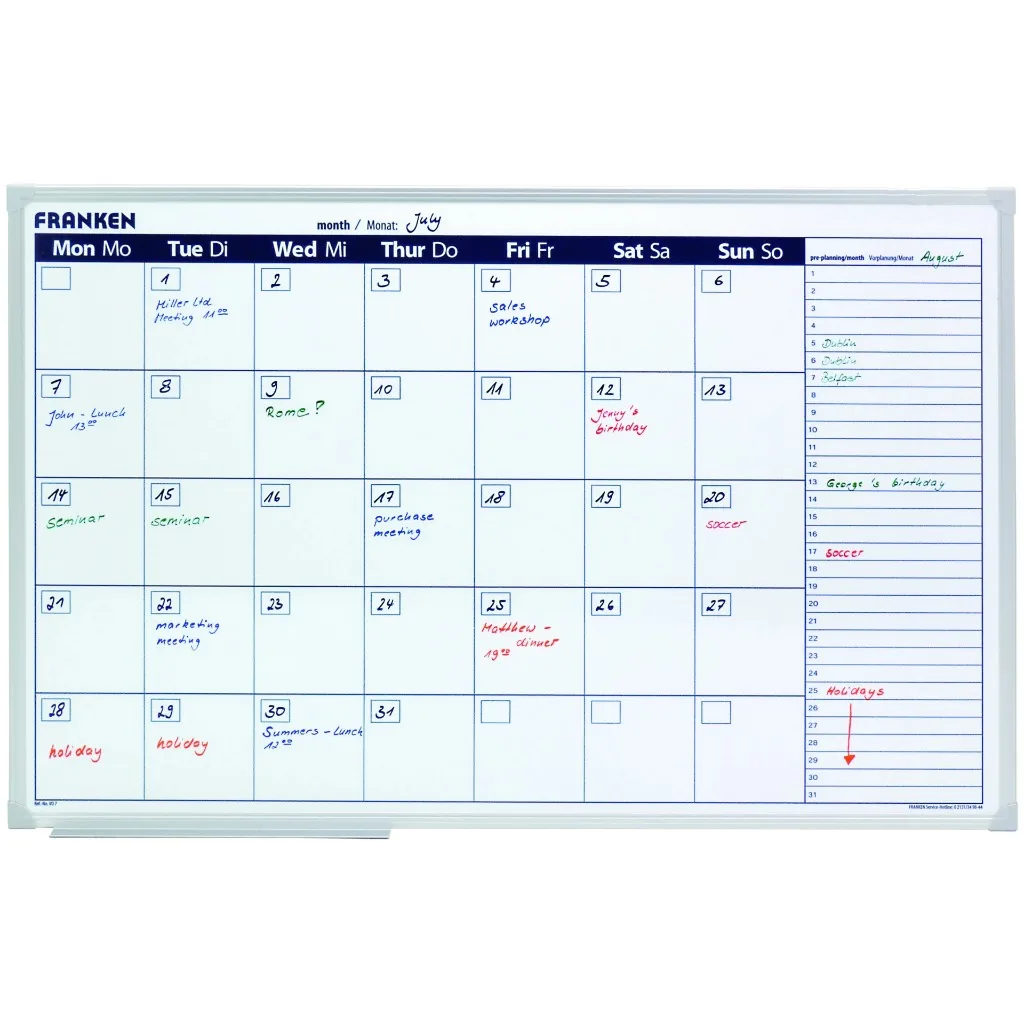
Mount it at the height of the person who writes on it most, not the tallest person in the building. If it is a planning board, the Franken monthly planner is a 90 by 60cm magnetic grid for £85, and it saves ruling lines every four weeks. Buy a starter set of markers, magnets and wipes with it. The Franken set is £42 and stops the first week ending with a board and no pen.
Most of this category costs less than £100, and the office furniture under £100 page gathers those items in one place. The full range, including projection screens and an outdoor snap frame, is in whiteboards and noticeboards. Every price is on the page, ex VAT, and the delivery date sits beside it.
One last thing. Check the wall before you order. The boards come with a mounting kit, but plasterboard, brick and a steel framed partition each want a different fixing. Ask if you are not sure. It is a two minute answer.
Contents

Marketing Manager
Gets Deskwell in front of people, then makes the words sound like us.