

The Office Storage Audit: Cupboards, Shelves, and Where Paper Goes to Hide
Every office I have ever worked in had too much storage and not enough of the right sort. Office storage cupboards full of things nobody has opened since 2019, a shelf of ring binders holding printouts of files that also live on the server, and one drawer of genuinely important paperwork that has nowhere sensible to go.
Before you buy anything, spend a quarter of an hour finding out what you actually need. It is the cheapest thing in this article.
The fifteen minute storage audit
Take a notepad round the office and do this in order. It is not sophisticated and it works.
Count what you have got. Every cupboard, shelf, pedestal and filing cabinet, with rough dimensions.
Open each one and put its contents into three piles on paper: needed weekly, needed occasionally, and needed by law or not at all.
Measure the weekly pile. That is the only storage that needs to be within reach of a desk, and it is usually far smaller than the furniture allocated to it.
Note anything that has to lock. Personnel files, contracts, anything with names and addresses on it, petty cash, spare keys.
Note the tall stuff. Lever arch files need 32cm of clear shelf height. Box files need about 26cm. Shelves that will not take a lever arch file are shelves that will hold a plant instead.
Most offices come out of that with a short list: one locking cupboard, some open shelving, and a skip.
When a cupboard beats shelving
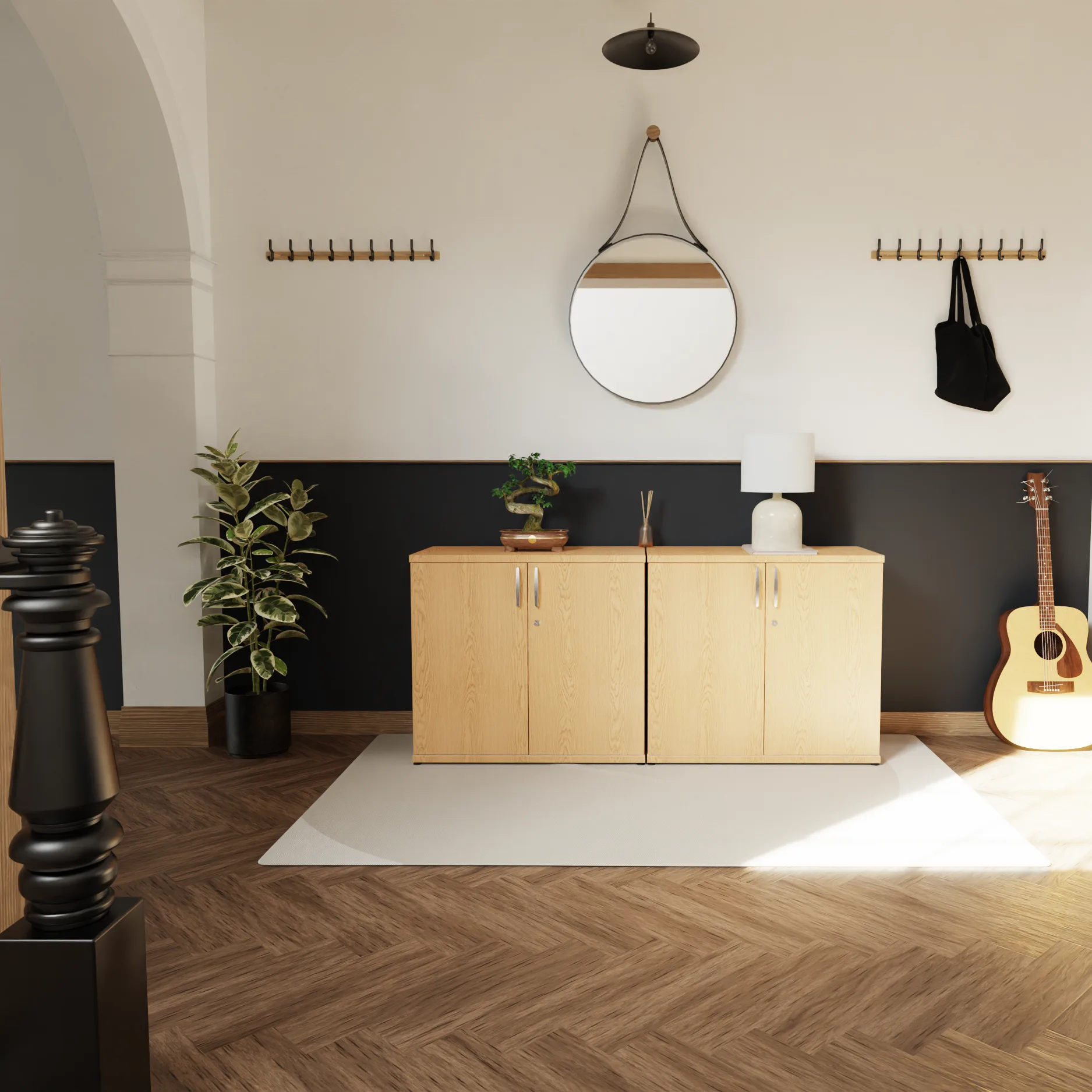
A cupboard hides mess, locks, and keeps dust off. Shelving is cheaper, lighter, and makes people tidier because everybody can see it. That is genuinely most of the decision.
The sizes are often identical, which surprises people. An Impulse storage cupboard and the matching bookcase are both 80cm wide and 40cm deep, both come in heights from 80cm to 200cm, both take 75kg of shelf load and both have adjustable shelves. The cupboard has doors and a lock. That is the whole difference, and it is worth deciding on rather than defaulting to.
My rule of thumb: anything a visitor can see, put behind doors. Anything the team uses every day, leave open, because a door on frequently used storage gets propped open within a week.
Tambour or hinged
Hinged doors are cheaper and open flat, which is fine when there is a metre of clear floor in front of the cupboard. In a corridor or a tight office they are a menace, because a door standing open blocks the route past.
Tambour doors slide sideways on a shutter and need no swing space at all. That is why they turn up in busy offices and photocopier rooms. A Qube tambour cupboard is 100cm wide, 47cm deep and comes from 100cm to 197cm tall, in steel rather than board, which is the other thing you are buying: steel takes knocks that a laminated cupboard does not.
The trade-off is that tambour shutters have more to go wrong and cost more to start with. In a quiet office with space, hinged doors will do the job for a decade.
Where to put it
Tall storage against the window wall blocks the light for everybody. Tall storage down the middle of a room makes two rooms out of one, which is often exactly what you want. Desk high storage at the end of a desk run gives you a surface for the printer and stops people piling things on the floor.
Whatever you choose, buy for what came out of the audit rather than what looks tidy in a brochure. The office cupboard range and the bookcases and shelving both list shelf heights and load ratings, so you can check a lever arch file fits before you order rather than discovering it on assembly day.
Contents

Marketing Manager
Gets Deskwell in front of people, then makes the words sound like us.