

Meeting Room Chairs: Comfort That Keeps Meetings Shorter
Nobody has ever left a meeting saying the chairs were too comfortable. Plenty have left one saying their back hurt and the agenda ran twenty minutes over. Meeting room chairs sit in a strange spot: they need to be good enough for an hour or two, and not so good that anyone settles in for the afternoon.
Here is how we would choose them, and what to measure before you order.
Match the chair to the length of the meeting
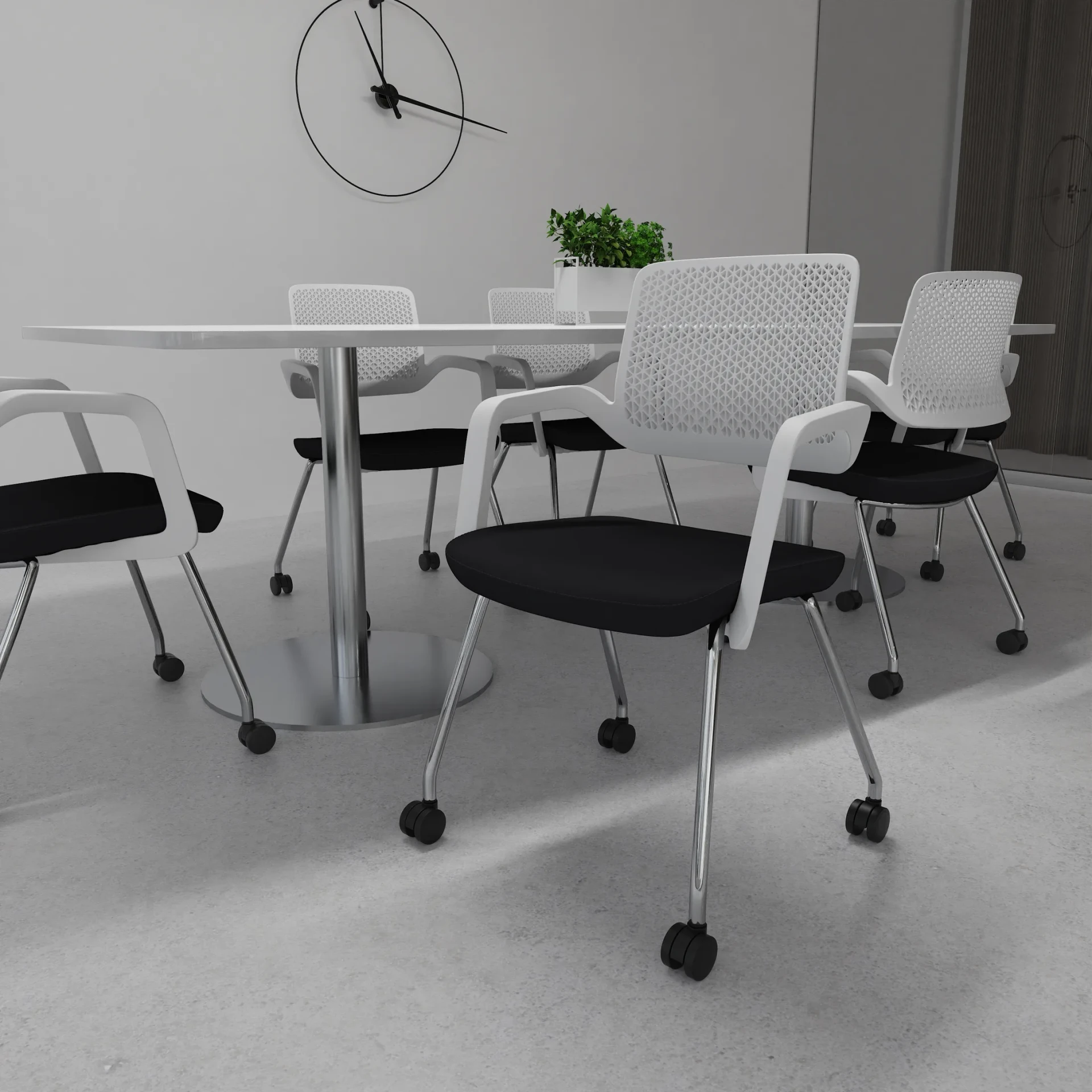
Every chair on the site carries a recommended usage figure. For meeting room chairs the ratings run from four hours to eight. If your meetings rarely pass 90 minutes, a six hour rating is plenty. The Cosmo training and conference chair is rated for six hours, has a medium back and fixed arms, and the seat is 45cm wide and 46.5cm deep.
Save the eight hour ratings for rooms that double as workspaces. A chair built for a full shift costs more and, for a weekly team catch-up, you will not feel the difference.
Check the seat height against the table
The Cosmo seat sits at 44.5cm and does not adjust. That is fine, as long as you have done the sum. The arms are 65.5cm high, and a standard table has about 70cm of clear space under the top. Our Impulse arrowhead boardroom table gives you 70.5cm, so the arms slide under with a few centimetres to spare. If you pair the chair with a thick-edged table or one with a deep frame rail, that gap closes quickly.
Measure the table you have and write the number on the order form.
Count the chairs properly
Allow 60cm to 70cm of table edge per person, and leave room to pull a chair back without hitting the wall. A 180cm table seats six comfortably, or eight at a squeeze. You always notice the squeeze when you are the one sat at the corner. Leave about a metre clear all the way round the table too, so people can get past a seated colleague without a shuffle and an apology.
Stacking, cantilever or four legs
Ask what happens to the room between meetings.
If the room is also a training space or a lunch room, pick a chair that stacks. Several of ours do, and the stacking and folding chairs category collects them in one place.
If the room is a showpiece, a cantilever chair looks better left out. The Cosmo cantilever meeting chair is the one to look at.
If the chairs never move, four legs and an upholstered seat is the comfortable choice.
Castors or glides
Castors let people shift and turn, and they let the whole room drift apart over an hour on a smooth floor. Glides keep everyone where you put them. On carpet, castors are usually fine. On hard flooring, think about glides, and check the product page for what each chair has before you assume.
Upholstery that survives a year of meetings
Meeting chairs get dragged, leaned on and sometimes wiped down after a lunch. The Cosmo seat comes in 21 upholstery colours, drawn from Camira's Phoenix, Xtreme, Quest and Rivet ranges. It has a 5 year guarantee on the mechanical parts and 2 years on fabric and foam. If you want to compare colours before you commit, our fabric office chairs page is a quick way to see what the range looks like.
A short checklist
Rated usage hours for the longest meeting you hold.
Seat height and arm height against your table.
Edge space: 60cm to 70cm per person.
Stacking, cantilever or fixed, depending on what the room does the rest of the week.
Castors or glides for your floor.
Get those five right and the chairs will do their job without anyone noticing, which is the best thing a meeting chair can manage.
Contents

Marketing Manager
Gets Deskwell in front of people, then makes the words sound like us.