

Ergonomic Chairs vs Task Chairs: Where the Money Goes
The word ergonomic does a lot of work in this trade. Put it in front of the word chair and the price goes up, sometimes by a few hundred pounds, and quite often nothing else changes. So here is what an ergonomic office chair should mean before it earns the extra money, and where a plain task chair does the same job for a third of the price.
I spent years on the other side of this industry and watched the badge get stuck on chairs that had no business wearing it. A lever for height and a knob for tilt tension is not ergonomics. That is a chair.
What an ergonomic office chair should actually do
Ergonomics means the chair adjusts to the person rather than the person adjusting to the chair. Four things, in the order I would check them, and each one is a line in the specification table.
1. The seat and the back move independently
On a basic task chair the seat and back are tied together by one mechanism. Recline the back and the seat tips with it. Independent seat and back means each locks on its own, so you can set the seat flat and the back a few degrees open. Look for the line Independent Seat and Back in the table. It says Yes or No, and No is the honest answer on most chairs under about £150.
2. A seat slide
Seat depth is the adjustment nobody asks for and everybody needs. A tall person on a short seat is perched. A short person on a deep seat cannot get their back to the backrest at all. A seat slide moves the seat forward and back by a few centimetres. It costs the manufacturer real money, which is why it is the first thing to vanish from a cheaper chair.
3. Lumbar support you can move
Most task chairs have a curve moulded into the back and call it lumbar support. It is in the right place for the average person, who does not exist. Adjustable lumbar means the pad moves up and down, and on better chairs in and out as well. If the table says Integral Lumbar Support: Yes and Adjustable Lumbar Support: No, you are getting the curve.
4. Arms that get out of the way
Height adjustable arms are the minimum. Arms that also slide and pivot let the chair get right up to the desk without the arms hitting the edge, which is the single biggest reason people end up sitting too far from their keyboard.
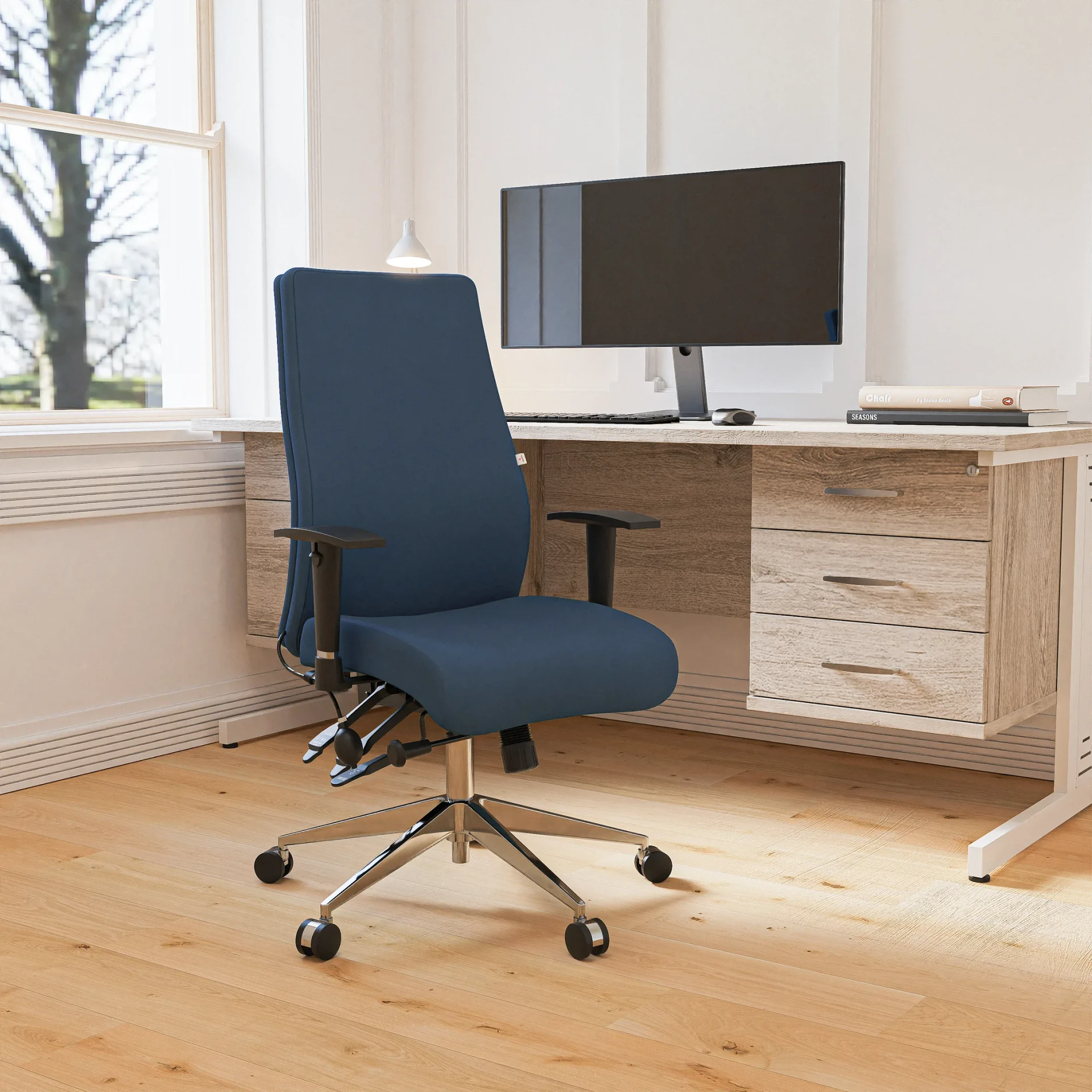
Where the money goes
Take two chairs we sell. The Eclipse Plus medium back task chair starts at £73 ex VAT. Gas height, a height adjustable back, a permanent contact backrest, and the dearer versions of the same chair add adjustable lumbar, height adjustable arms and independent seat and back. It is rated for 8 hours a day and 125kg, with 3 years on the mechanism. For a lot of desks that is exactly enough.
The Onyx high back ergonomic posture chair starts at £386 ex VAT. Independent seat and back, seat slide, adjustable lumbar, height adjustable arms, seat angle adjustment and tilt tension, rated for 24 hour use and 135kg, with 5 years on the mechanism. The extra money bought the mechanism under the seat. The guarantee is the manufacturer telling you how long they expect that mechanism to last.
That is the honest gap. Three hundred pounds buys three or four more adjustments and a mechanism built to be adjusted all day, every day. It does not buy a better chair for someone who sits down for two hours of email and gets up again.
Where it is upholstered marketing
Things that raise the price without changing how the chair fits: a taller back with no more adjustment behind it, a headrest on a chair nobody will lean back in, a chrome base instead of nylon, the word executive, and a thicker seat foam that feels lovely for a fortnight and then settles to what the cheaper chair had all along.
The tell is the specification table. If a chair is £350 and the table says No to independent seat and back, No to seat slide and No to adjustable lumbar, you are paying for the finish. That is a fine thing to pay for if you want it. It is not ergonomics.
A chair that adjusts in four ways and gets used in none of them is an expensive task chair. Show people the levers on the day it arrives.
Who should spend what
Someone at a desk for the full working day, most days, should have independent seat and back and adjustable lumbar as a minimum, and the adjustable lumbar office chairs page is a decent shortlist. Someone who is at the desk for part of the day, or hot-desks, or works from the kitchen table on Fridays, is well served by a task chair and would not notice the difference.
Both are on the site with the full specification table on every listing, so the comparison takes five minutes: ergonomic office chairs and computer and task chairs. Same price whether you buy one or fifty, and the table says the same thing to everyone.
Contents

Product Manager
Picks the ranges and knows which chair suits which back.