

Boardroom Presence: Tables That Mean Business
A boardroom table is the one piece of furniture that visitors walk in and look at first. It sets the tone before anybody says a word. So we treat boardroom tables differently from the rest of the range: more thought about shape, more attention to the legs, and a harder look at the cable arrangements.
This is what we would think about, in the order we would think about it.
Shape decides how the meeting feels
Rectangular is the efficient default. It seats the most people per square metre and it gives the meeting a head of the table, which some boards want and some do not. A D-end softens the two ends of a long table and is the usual boardroom shape, and our D-end boardroom tables page shows the options side by side. Barrel tops widen in the middle so people at either end can still see each other.
Round and square tables put everyone on equal terms. They suit a small room and a conversation where nobody should be at the head. A presentation is the opposite case. If most of the room faces one screen, a long rectangle works better.
Nothing about a boardroom table should make a visitor look under it.
Size it for the people, then for the room
Allow 60cm to 70cm of edge per person, plus about a metre clear all round for chairs and for walking past. A 240cm table seats eight comfortably. Tables on the site run up to 480cm, but in practice the room, not the table, is the limit. Measure the room, mark the table out on the floor with tape and sit a few people around it before you order.
Legs are where people go wrong
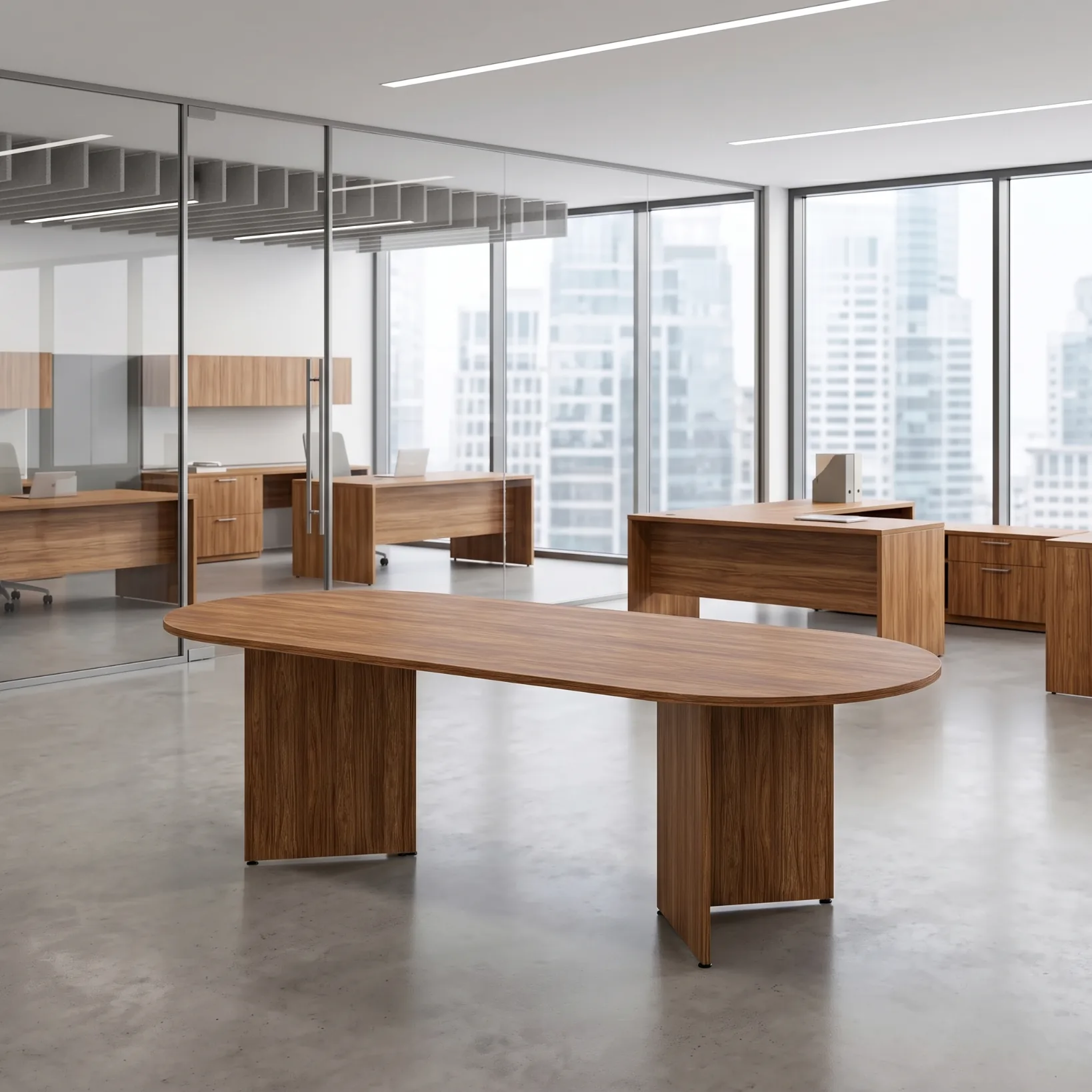
On any table over about 160cm, ask where the legs are and where somebody will want to sit. Post and pedestal bases keep the edge clear all the way round. Box and sled frames are more stable, but there is a leg somewhere. The photographs and the specification tab on each product page show the leg positions, and it is worth laying them against your seating plan.
Finishes and frames
Pick a finish that matches the rest of the office. The finishes on our boardroom tables run through the desking too, so the boardroom can be specified in the same wood or white as the floor outside it. If you want something with warmth, look at walnut office tables. Frame colour is chosen separately, so the top and the base do not have to match each other.
Take the Impulse arrowhead leg boardroom table as an example. It is 180cm to 240cm wide, 100cm deep and 73cm high, with a 25mm MFC top (melamine-faced chipboard) in six finishes from beech to walnut, in rectangular or D-end. It is rated to 135kg and carries a 5 year guarantee. If you want a different feel, the Italia trumpet base D-end table and the Oslo oval wooden leg table are the two we would put next to it.
Cables nobody notices
Power and data are the part that spoils a good table. A trailing extension lead taped underneath ruins the effect in a minute. On the arrowhead table the power and data module is a choice at order time, in white or black, and the cut-out is made at the factory. That looks far better than a hole drilled on site afterwards, so decide before you order, not after the table arrives.
Boardroom tables: the short version
Choose the shape for the kind of meeting you hold, size the table for the people and the room, check where the legs fall, and decide on power before you click order. Browse the full boardroom tables range with the sizes and the prices on the page, ex VAT, so you can work it out without a call.
Contents

Managing Director
Runs the place, answers the phone, and walks Oscar - the buck stops with him.