

Training Room Tables: Flip Tops, Castors and Quick Change Rooms
A training room earns its keep by being something else on Tuesday. Rows facing a screen in the morning, a U-shape for the afternoon workshop, an interview panel the next day and a lunch for twelve on Friday. The room does not change. The training room tables have to, and most of what goes wrong in these rooms comes from buying tables that were never meant to move.
I have sat through enough sessions where two people were dragging a fixed table across a carpet while everyone else pretended not to watch. The fix is choosing the right kind of movement for the room you have.
Three ways a training room table moves
There are really only three mechanisms worth talking about, and each solves a different problem.
The simplest is a table on castors. Our Impulse straight mobile training room table rolls where the session needs it, and one person can reset a room of them before the kettle has boiled. With the castors on it stands 76cm tall, a shade above a normal desk, with 72.7cm clear underneath so chairs still tuck in. What it does not do is get any smaller. A rolling table still needs a home when it is not in use, and that is the trade-off with castors: easy to move, no easier to store.
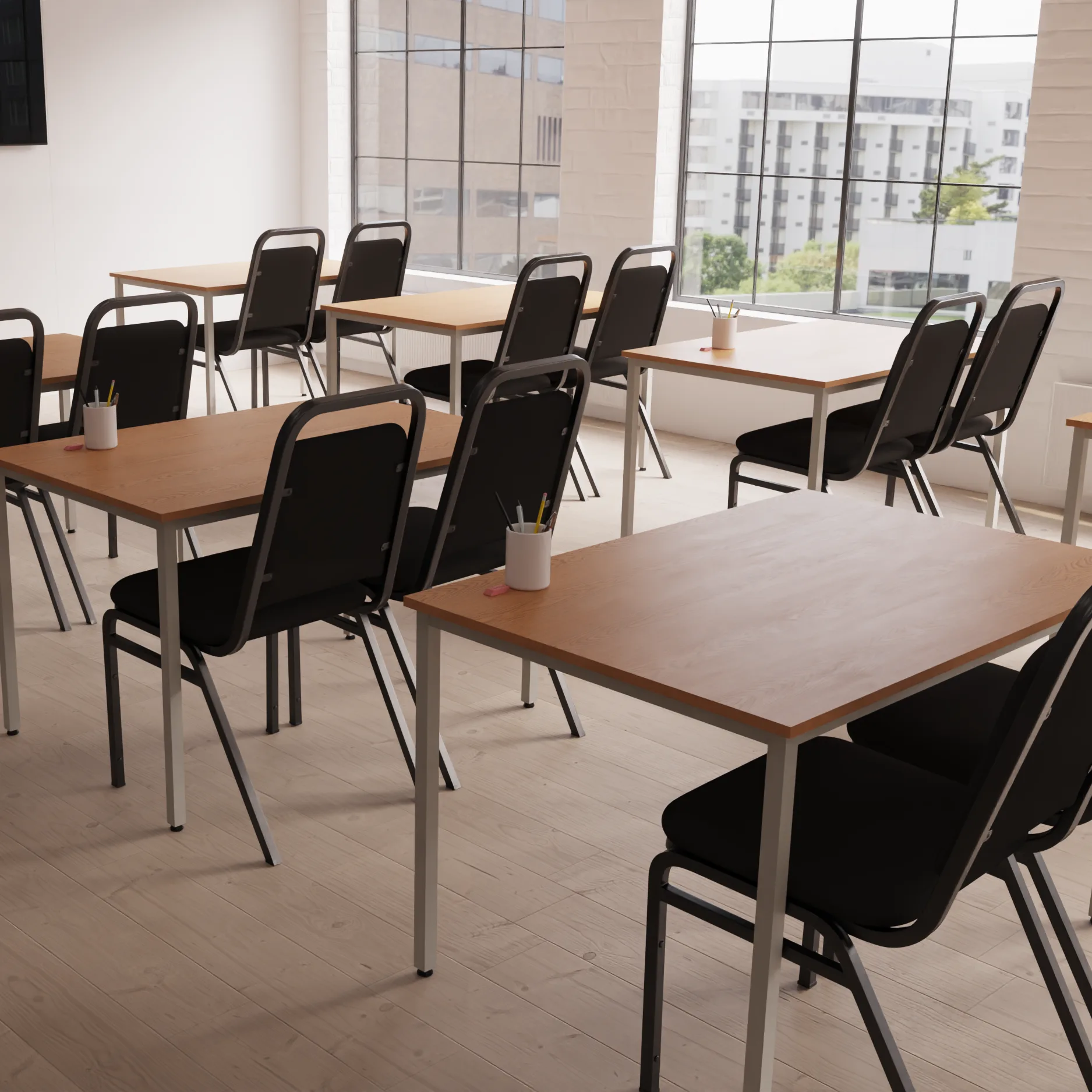
A flip-top table solves the storage half. Release the catch, the top swings upright, and the tables nest against each other in a corner or a store room. The Impulse Plus rectangular flip-top table comes in widths from 120cm to 180cm and two depths, 60cm or 80cm. The 60cm depth is the trainer's friend. It is slim enough to run in rows facing a screen without swallowing the room, and a room set for twenty becomes an empty floor in minutes. Flip tops cost more than a fixed table, and the mechanism is the part to look at, because it is the part that wears. Ours is rated to 100kg and carries a five year guarantee, which is longer cover than most rooms will ever test.
Then there are shapes. A trapezium table with 60 and 120 degree corners clusters into hexagons, fans and zigzag runs, which is the difference between a room that does group work and one that only says it does. Semi-circles cap the end of a run so nobody sits on a corner. None of this needs a mechanism. It needs someone to think about the layouts before the order goes in.
The castor question
Castors or glides? My answer is a question back: how often does the room change? If it is more than once a week, castors, and do not let anyone talk you out of them to save a few pounds a table. They pay for themselves the second time the layout changes. If the room changes once a term, a fixed table on glides is cheaper, sits a little lower and never creeps when someone leans on it.
Castors on a flip-top table are the combination most rooms actually want. Roll it, flip it, park it. The only warning I would give is height: a 180cm table flipped upright is 180cm tall, and store cupboards with a shelf at head height have caught people out before.
Linking, matching and the boring bits
Linking clips are a nice idea that most rooms never use. Tables that butt up neatly are usually enough, and clips are one more thing to lose. Matching matters more. Every table here comes in the same six wood finishes as the Impulse desks and storage outside the door, so a training room in the same oak as the office stops looking like a hired hall. The tops are heat resistant melamine with a 2mm impact edge, which is the part that takes the knocks when a table is flipped and rolled every day.
A few things to settle before ordering:
Count the layouts you will actually run, not the ones in the brochure. Rows, U-shape and clusters cover most rooms.
Measure the store cupboard and the door to it, with the table upright, not flat.
Pick one finish and one frame colour for the whole room. Mixed rooms look like they were bought in stages, because they were.
Order the semi-circle ends at the same time. They are the piece people forget and then cannot match later.
The whole training room tables range is on the site with every dimension and price on the page, and the folding and flip-top tables sit beside it for rooms that need to disappear entirely. If the room is on the bright side and you want it to stay that way, the white office tables page is a good shortcut. And if you are not sure which of the three mechanisms your room needs, tell us how often it changes and we will tell you honestly, which sometimes means telling you to buy the cheaper one.
Contents

Product Manager
Picks the ranges and knows which chair suits which back.