

The Visitor Journey: From Front Door to Meeting Room
Walk into your own office as if you have never been before. The front door, the first thing you see, where you stand while someone comes to fetch you, what you sit on, what you can hear. Most of us stopped seeing our reception years ago. Visitors see it in about four seconds.
I spent a long time in hotels before furniture, and the one thing that carries over is this: people decide how they feel about a place before anyone speaks to them. Good office reception design is a route, and every point on that route is a small decision about furniture.
Walk it yourself, in their shoes
Stop one: the door
What is the first object a visitor sees? If it is the back of a monitor or a pile of parcels, that is the greeting. It should be a person or, failing a person, a clear place to wait that is obviously meant for them. A pair of chairs and a table say 'sit here, we know you are coming' without a sign.
Stop two: the wait
This is where furniture does the most work. Nobody waits well on a chair that is too low to get out of gracefully. A seat height around 45cm to 46cm suits most adults, and it is where our reception seating sits: the Neo twin tub sofa at 46cm, the Lamport two seater at 45cm, the Madrid visitor chair at 46cm. The Neo is soft bonded leather that wipes clean, which matters in a reception more than anywhere else. The Lamport is fabric with a ten year frame guarantee and a curved back that is easy to sit on the edge of, which is how visitors sit.
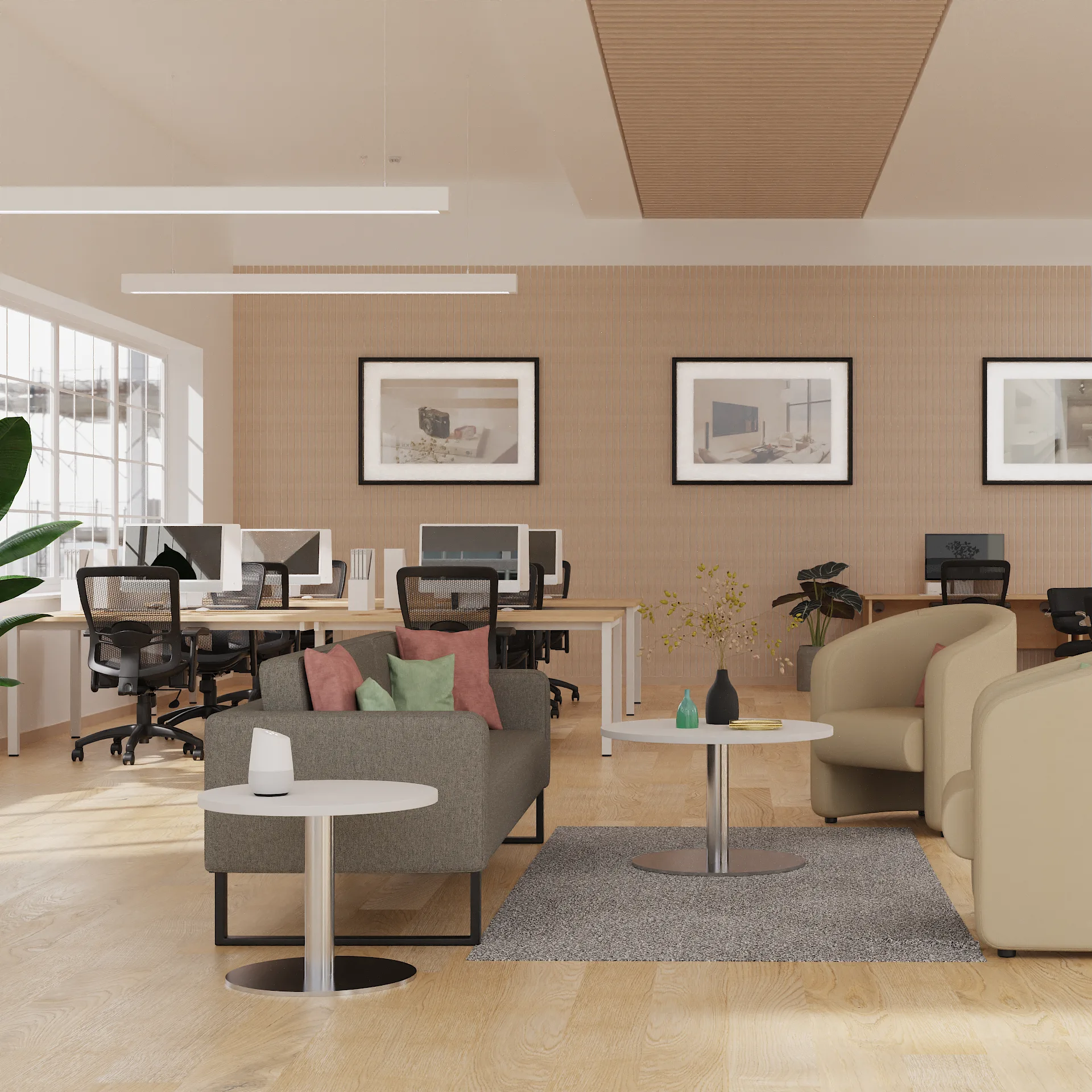
Give them a table. Something to put a coffee on, at knee height, that does not wobble. The Italia round coffee table is under 50cm high, sits on a weighted trumpet base so it stays put, and comes in the same six finishes and three frame colours as the rest of the Italia range, so it matches whatever else you have.
Stop three: the walk
From the waiting area to the meeting room, what does a visitor pass? Usually the whole office. That is fine, and often a good thing, as long as the route is clear and nobody has to squeeze past a printer. Roughly a metre of clear walkway feels comfortable. Much less than that feels like a corridor, and a corridor with a visitor in it feels like an apology.
Stop four: the room
By the time they sit down, the visitor has formed a view. The meeting room chair either confirms it or quietly undoes it. A stacking visitor chair like the Brunswick, with a 49cm seat, an eight hour rating, arms or no arms and 30 colours, is the honest answer for rooms that change shape. If the room never changes, a cantilever chair holds its position better and looks as though it meant to be there.
People decide how they feel about a place before anyone speaks to them.
The small things that add up
Sightlines. From the waiting chair, can they see the door they came in through and the person who will collect them? Both is ideal. Neither is a mistake.
Sound. A reception with a hard floor, a glass wall and no soft furniture is an echo chamber. Fabric seating absorbs a surprising amount, and it is the cheapest acoustic treatment there is.
Consistency. If the reception is grey, the meeting room is beech and the desks are white, the visitor notices something is off without knowing what. Our visitor chairs and much of the soft seating are covered in the same Camira fabric collections, so the sofa in reception and the chairs in the meeting room can match without anyone having to ring a supplier.
Do the walk this week. Take a notebook and write down every point where you would hesitate if you did not work there. Then look at the reception and visitor chairs and the coffee and side tables with that list in your hand. If blue is your colour, the blue reception chairs page narrows the list to the ones that will sit in the waiting area. It is a short list of small decisions. Get them right and nobody will ever mention your reception, which is exactly how it should be.
Contents

Customer Experience Manager
Makes sure every order feels handled by a person, not a portal.