

The Task Chair Test: What to Look For Before You Buy
Most task chairs look much the same in a photograph. Black, mesh or fabric, five castors, a lever or two hanging off the side. The gap between a chair somebody is happy in after three years and one that gets quietly swapped for the spare from the meeting room comes down to about five things, and none of them show up in the picture. So here is a task chair buying guide that skips the marketing and goes straight to what to check.
I look at these in order. If a chair fails the first one, the rest hardly matters.
The five checks in this task chair buying guide
1. Seat depth, before anything else
Sit right back in the chair. You want two or three fingers of gap between the front edge of the seat and the back of your knee. Too deep and the edge presses into your legs all day, so you perch forward and lose the backrest entirely. Too shallow and your thighs get no support.
This is where fixed and adjustable chairs part company. The Eclipse Plus Deluxe has a 41cm seat, which suits a lot of people and will feel short to anyone tall. The Orlena slides from 48cm to 53cm, so one chair covers a much wider range of legs. If the chair is for a shared desk or a hot desk, get the adjustment.
2. The mechanism, and whether anyone will use it
Three types turn up again and again. A permanent contact back moves with you as you lean and is fine for shortish stints. A synchro mechanism tilts seat and back together at different rates and is what you want for full days. A basic tilt with a knob is the cheapest and the one most likely to be locked upright in week two and never touched again.
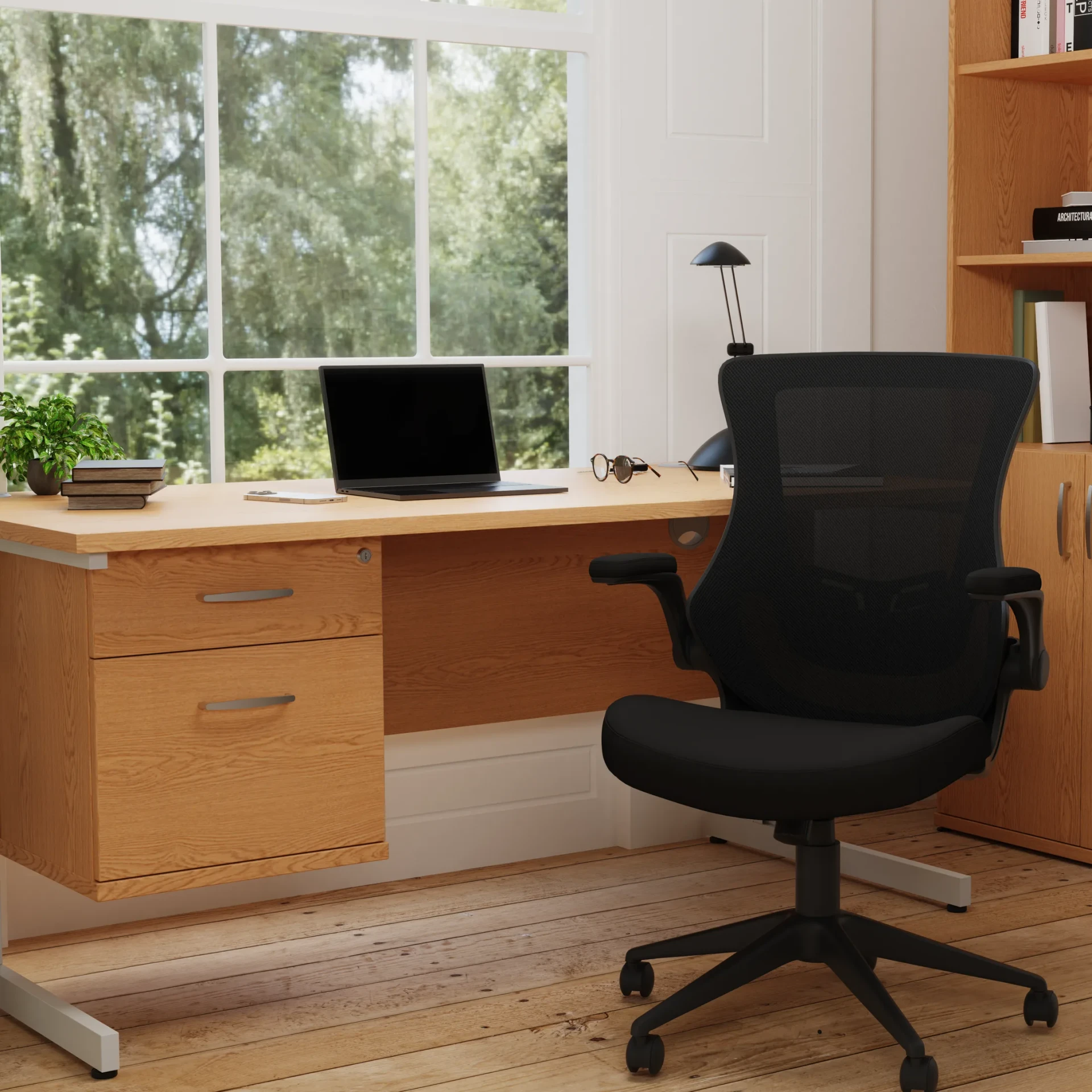
3. Adjustments you will actually touch
Height and tilt get used. A back height adjustment gets used, because the lumbar curve needs to land in the small of your back rather than somewhere near your shoulder blades. Arms get adjusted once, on day one, and then left. Four-way arms sound wonderful and mostly earn their keep in shared spaces.
Be honest about who is sitting in it. A chair for one person can be set up once and forgotten. A chair three people share across a week needs every lever it can get.
4. Fabric, and how long it has to last
Upholstery wear is measured in Martindale rub cycles. Anything sold for commercial use should be well north of 40,000, and the good stuff runs higher. Mesh backs deal with heat better and show marks less. Fabric seats feel warmer in a cold office and are easier to live with in winter.
If the chair sits in a call centre or a shift-worked room, look for a 24 hour rating. Those chairs are built for continuous use and have the foam density to prove it.
5. The weight rating nobody reads
Every chair has a maximum user weight and it is usually printed in the smallest type on the page. A standard task chair is often rated to 110kg or 120kg. Heavy duty models go to 150kg and beyond, with a stronger gas lift and a wider base to match.
This one matters more than people like to discuss. A chair used beyond its rating fails at the gas lift or the base, usually about fourteen months in, and it is a miserable conversation to have afterwards. Check the number, buy the right chair, forget about it.
What I would do
Sit in the thing if you possibly can. Failing that, work through the five checks above with a tape measure and your own height in mind, then buy from the range that publishes the answers. Every chair in our task chair range lists its seat depth, back height, mechanism and weight rating, so a shortlist takes about ten minutes.
And if two chairs still look identical after all that, buy the one with the better warranty. That is the manufacturer telling you what they privately expect to happen.
Contents

Product Manager
Picks the ranges and knows which chair suits which back.