

Storage Accessories: Dividers, Trays, and the Art of the Tidy Drawer
I like a tidy drawer. Not in a way I make a fuss about. I just notice when a cupboard is doing half the job it could, and it is nearly always because the inside was never finished. The unit arrived, the doors went on, the paperwork went in, and nobody thought about what sits between the two.
Office storage accessories are the parts that finish the inside. Extra shelves, filing frames, roll-out shelves, castors, handles. None of them cost much. All of them decide whether a cupboard is storage or a place paper goes to hide.
The gap in the middle
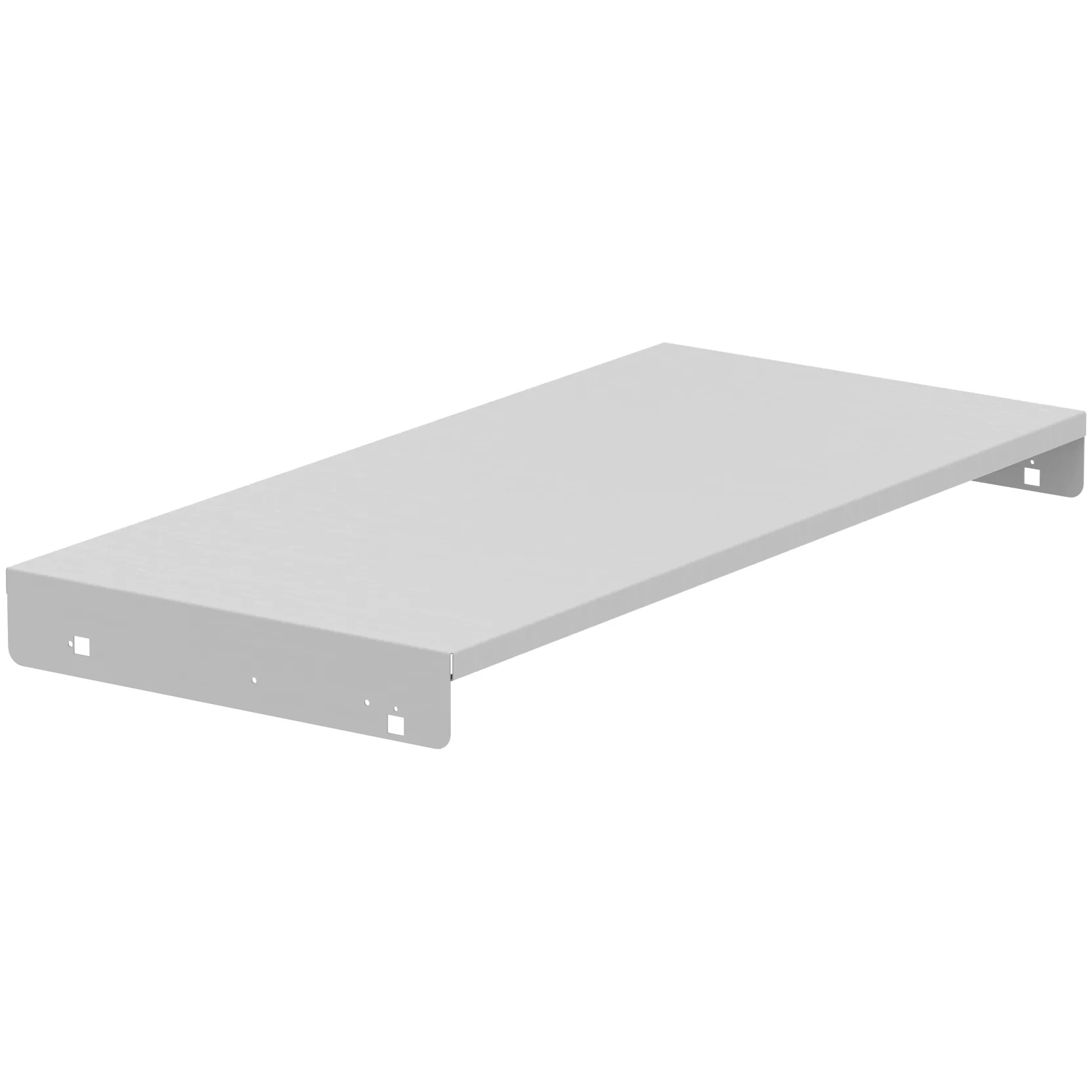
Every cupboard has one. A tall space between one shelf and the next, half full, with something balanced on something else. The Impulse extra shelf is the fix for the Impulse units. It is 75cm wide, 2.5cm thick and rated to 20kg, and the pins come in the box. Put the pins in the next set of holes, drop the shelf on, and the gap becomes two levels. Seven finishes, so it matches the unit it goes in. Five year guarantee.
Filing that comes to you
Suspended filing at the back of a cupboard is where good intentions end. You cannot flick through it, so you pull a file out and take it to your desk, and it does not go back. The Qube roll-out suspended filing frame hangs the files in a steel frame that pulls the whole row out into the open. You flick, you find, you push it back. Bisley make it. 80cm wide, light grey or black, five year guarantee. Fit it in the bottom half of the unit. The maker says so, and they are right, because a loaded frame up high makes a cupboard top heavy.
The roll-out reference shelf does the same job for anything that does not hang. It is a flat steel shelf on silent glide runners with an anti-tilt design. Pull it out, lay the file on it, read what you need, push it back. No trip to the desk. Same rule about the bottom half.
If you keep A4 files rather than foolscap, the lateral filing frame turns a plain shelf in a Qube side tambour or stationery cupboard into side-to-side suspension filing. One frame across a 90.8cm opening holds more than you would guess. A4 only. It weighs 2kg, so fitting it is one person and a couple of minutes.
Order of operations
Fit the inside in this order. It takes an hour, and it is an hour you only spend once.
Empty the unit properly. All of it, on the floor, sorted into keep, archive and bin. This takes twenty minutes and everyone skips it.
Decide what hangs and what stacks. Hanging files get a frame. Box files and ring binders get shelves. Do not mix them on one level.
Put the heavy things low. Roll-out frames and reference shelves in the bottom half. Light stationery up top.
Set shelf heights to the contents. Measure the tallest binder on each level, then move the pins.
Label the outside. A cupboard you have to open to know what is in it gets opened twenty times a day.
The small parts nobody orders
Castors. The Impulse twin wheel castor set turns a low unit into one you can move to hoover behind, or roll out of the way for a meeting. Handles. The Impulse handle set comes in white, black or silver, which matters when you buy a second cupboard three years after the first and the handles no longer match. Both are cheap. Both are the sort of thing you only think about when the order has already gone.
A cupboard is finished when the inside works, not when the doors close.
Everything on this page sits well under the hundred pound mark, and the office storage under £100 page collects that end of the range in one place, accessories included, if you are starting from scratch.
None of this is exciting. That is rather the point. The accessories are the difference between a cupboard that works and one that gets replaced in three years because nobody could find anything in it. Go through the storage accessories while you are ordering the cupboard, so you are not ordering twice and the inside gets finished the same day as the outside.
Contents

Marketing Manager
Gets Deskwell in front of people, then makes the words sound like us.