

Mesh Office Chairs: Breathable, Light, and Occasionally Misunderstood
The mesh office chair has been the default in British offices for about fifteen years now, and it arrived with a reputation it has never quite shaken: light, airy, modern, and according to some people, about as comfortable as sitting on a tennis racket. Both halves of that are fair. It depends entirely on which bit of the chair is made of mesh and how well the frame around it is shaped.
Here is what mesh genuinely does well, where the complaints come from, and how to pick one that survives real eight hour days.
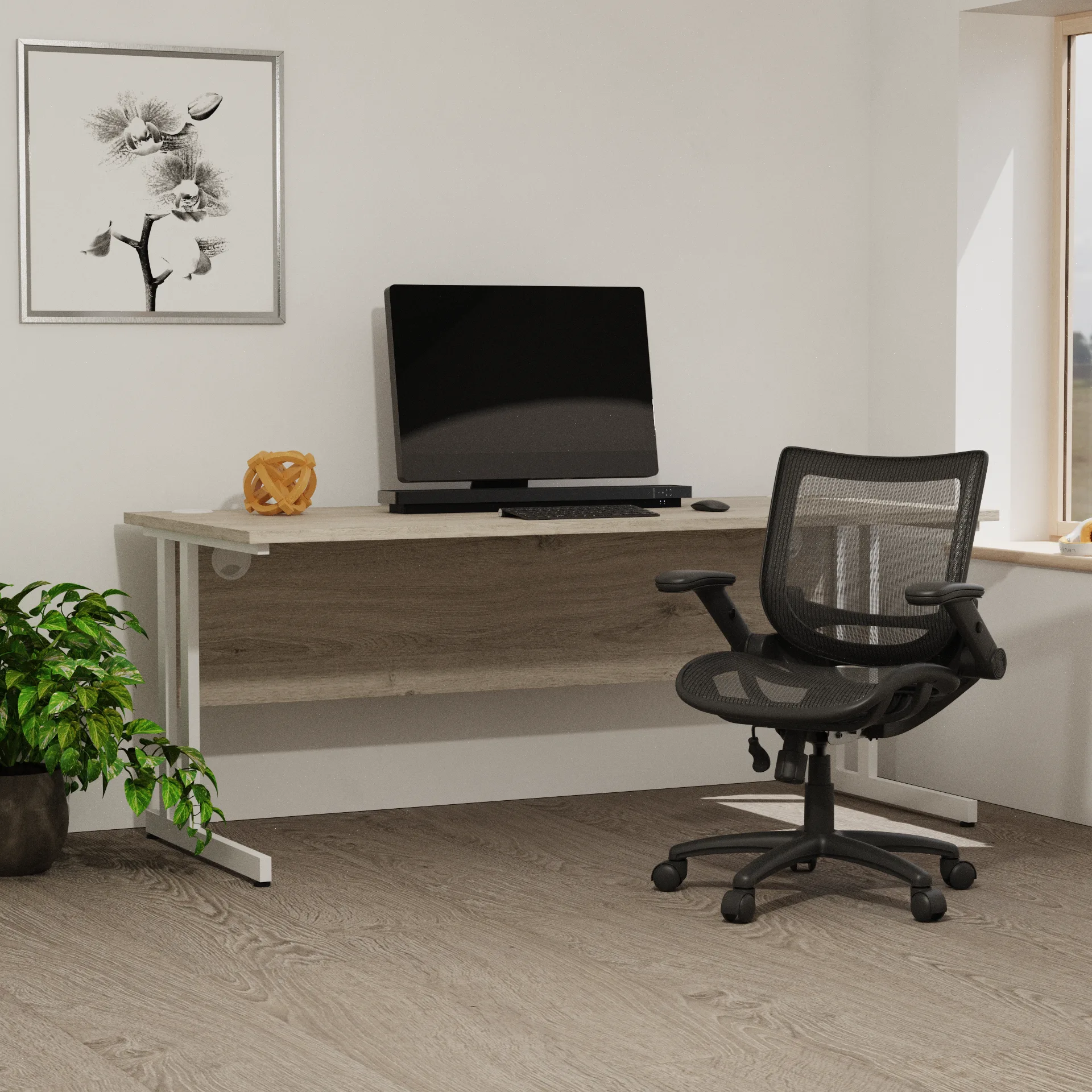
What a mesh office chair does well
Heat is the honest headline. A mesh back lets air through, which matters in a south-facing office in July and matters even more if you wear a jacket at work. Fabric holds warmth against your back for as long as you sit there. Mesh does not.
It also stays looking new for longer. Mesh does not flatten the way foam does, so a mesh back chair at year four looks much the same as it did on day one, while a fabric chair has developed a permanent impression of whoever sits in it. Marks and spills wipe off rather than soak in.
And it weighs less, which sounds trivial until forty of them arrive on a pallet and somebody has to get them up two flights of stairs.
Where mesh divides opinion
Nearly every complaint I hear about mesh is really a complaint about the frame.
It digs in at the front of the seat and my legs go numb by lunchtime.
That is the seat edge, not the mesh. An all mesh seat stretched over a hard frame puts a rim under your thighs, and if the seat is a touch too deep for you, that rim lands in exactly the wrong place. A well made all mesh seat curves the frame away at the front and you never notice it. A cheap one does not bother.
The other one is lumbar feel. Mesh gives a firmer, more even support than foam, and people used to a padded chair often read that as unsupportive for the first fortnight. Usually it passes. If it does not, the answer is a chair with an adjustable lumbar or a height adjustable back, so the curve lands where your back actually bends rather than where the factory guessed.
All mesh, or mesh back with a fabric seat
Mesh back with a padded fabric seat is the safe buy. You get the airflow where the heat is, and foam where the pressure is. It suits mixed offices where you cannot ask everyone their opinion first.
All mesh is lighter, cooler and easier to clean, and it is the better choice for warm rooms, shared desks and anywhere that gets a lot of use. The Fuller is a straightforward example: all mesh, medium back at 48cm, folding arms for when the chair has to tuck right under a bench desk.
Buying a mesh chair for eight hour days
For a chair somebody sits in all day, spend the extra on adjustment rather than on looks. The Mirage II makes the point: the back runs from 54cm to 73cm, so the same chair works as a medium back for one person and a high back for the next, and the arms move from 66cm to 73cm and come off entirely if they get in the way under the desk.
The Fuller, by contrast, has a fixed back height and no lumbar adjustment. That is not a fault, it is a price. For a meeting room, a spare desk or somebody in twice a week it is plenty. For a full time seat, get the adjustment.
Everything in our mesh office chair range lists back height, arm height and whether the lumbar adjusts, so you can sort the eight hour chairs from the two hour chairs before you get as far as the colour.
Contents

Product Manager
Picks the ranges and knows which chair suits which back.