

Deliveries, Access, and Lifts: Ordering Furniture Without Surprises
Most delivery-day problems are decided weeks earlier. Somebody orders a long boardroom table for a second-floor meeting room, nobody mentions that the lift is out of action, and on the day two people and a very large box stand at the bottom of the stairs looking at each other.
None of that is hard to avoid. It just needs somebody to walk the route before the order goes in. This is our furniture delivery access checklist, and it takes about five minutes with a tape measure.
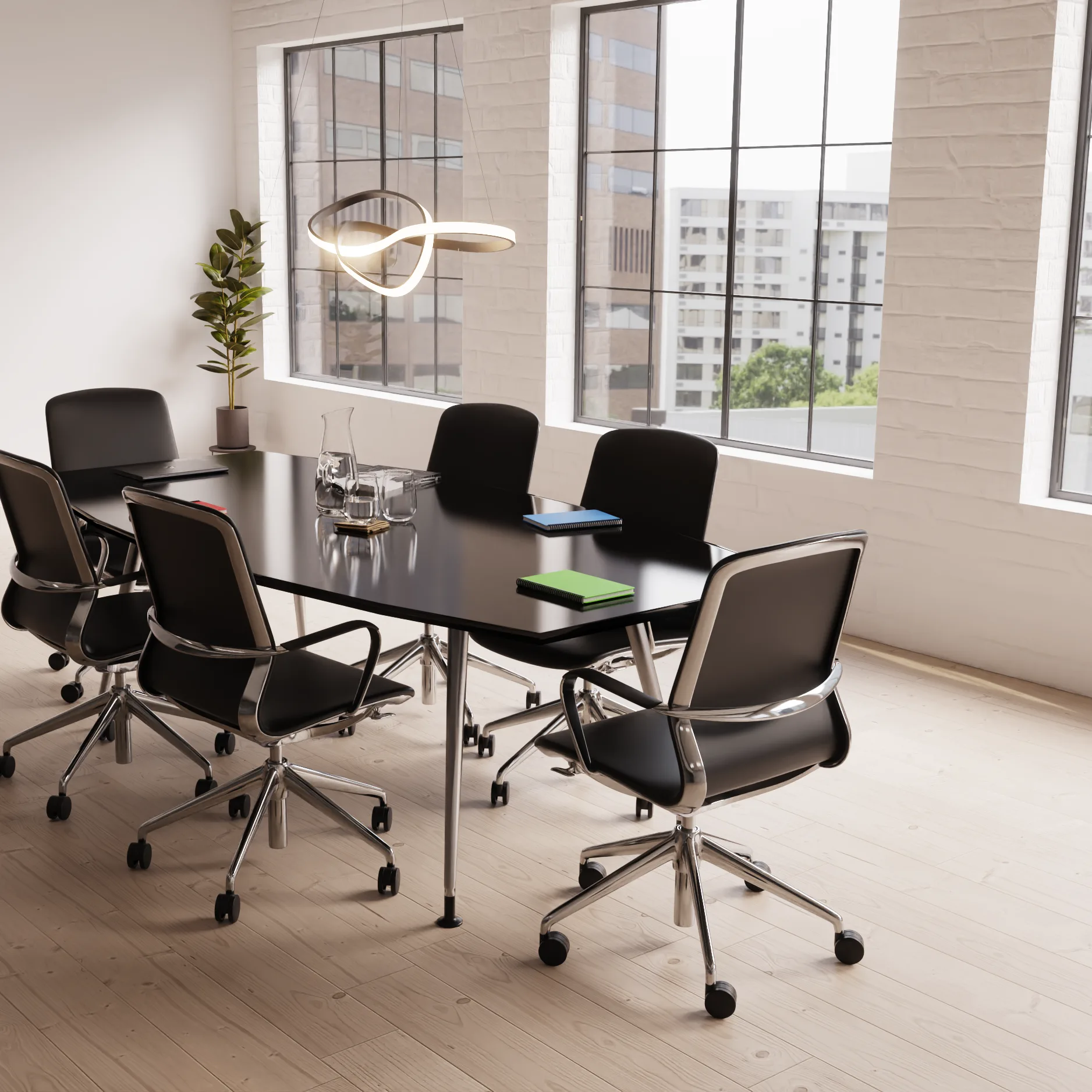
What a delivery actually looks like
Standard delivery is free, and it arrives flat-packed at your door. Larger items often come on pallets or with a two-person crew. For those, and for anything with installation, our logistics team calls first to agree the day.
Flat-pack is the forgiving option. Boxes are long and thin, and they go round corners that the finished piece never would. Pre-assembled delivery and installation are different. Then the furniture travels the route at its full size, and the route has to take it. Our Delivery and Installations page explains what each service includes.
Weight matters as much as size. The Oslo large rectangular boardroom table runs from 320cm to 480cm long and weighs between 72kg and 108kg. That is not something one person carries up a fire escape.
The checklist
Walk it in the order the crew will.
1. Where does the lorry stop?
Is there parking close to the door? A loading bay, and if so what are its hours? A barrier, a gate code, a permit, a one-way street the satnav has never heard of? If the nearest legal stop is round the corner, say so.
2. Kerb to front door
Steps, slopes, gravel, a narrow side path. Anything that turns a trolley job into a carry.
3. Every door on the way
Measure the width of each door between the van and the room. Not the door itself, the clear gap when it is open. The narrowest one is the number that counts. Fire doors that only open partway count too.
4. Stairs and turns
Straight stairs are rarely the problem. Turns are. Look at each landing and ask whether something long could swing round it. Note any low ceiling at the top of the flight.
5. The lift
Measure inside it, not the door: width, depth and height. Then the door opening. Check the weight limit. If it is a goods lift that needs booking, book it for the agreed day. If it is out of action, tell us before the van sets off rather than after.
6. Who is there
Someone needs to be on site on the agreed day, and they should know what is coming and where it is going. Clear the room first. A crew cannot put a cupboard against a wall that has a cupboard against it already.
Tell us at checkout
There is a box on the delivery step at checkout for exactly this. It takes 500 characters, which is plenty for the floor, the lift, the gate code, parking and who to ask for. It goes out with the order, so the crew sees it.
Two things to know about it. It belongs to that order, so the next order starts with an empty box. And it cannot be edited once the order is placed, so if something changes afterwards, contact us with your order number and we will pass it on.
A failed delivery costs from £10 an item, plus storage if the order has to go back to a warehouse. A gate code in the box costs nothing.
On the day
Check the delivery while the driver is still there if you can. If anything is damaged, short or wrong, note it on the carrier's paperwork before you sign. Then report it within 5 days of delivery from your order page, with photographs. Noting it with the driver protects your claim and ours.
If you are ordering big pieces, such as meeting and boardroom tables or tall office cupboards, do the checklist before you choose a size, not after. Every table page lists its length, depth and weight, and our rectangular meeting tables page lets you compare them side by side. It is much easier to pick the 320cm table than to discover the 480cm one will not turn on the stairs.
Contents

Marketing Manager
Gets Deskwell in front of people, then makes the words sound like us.